Kid-Friendly Dental Visits: How to Help Children Feel Calm at the Dentist in Wilmington
For many parents, the real question is not just whether a dental office sees children. It is whether the visit will feel manageable enough that the child stays calm, cooperative, and willing to come back. At Facciolo Dentistry, that difference matters because a stressful early experience can make future visits harder, while a calm, well-explained visit can give families a better path forward.
What Parents Mean When They Search for a Kid-Friendly Dentist in Wilmington
Most parents searching for a kid-friendly dentist in Wilmington are not just looking for an office that accepts children. They are looking for a dental team that knows how to talk to children, explain what is happening, and help keep the visit from turning into a struggle.
This is where many practices sound similar online. They use the phrase “kid-friendly,” but parents are usually trying to answer a more practical question: will this office know how to help my child feel comfortable enough to get through the visit? That usually comes down to patience, communication, and a steady pace.
For families who want care in one place, a general dental office can be a practical fit when it takes children’s comfort seriously. If you are comparing that option, this guide to what general dentistry includes for new patients gives helpful background on the role of routine dental care.
- Clear, calm communication
- Patience when a child hesitates
- A visit that feels predictable instead of rushed
- A team that knows how to speak to both the child and the parent
What Actually Helps Children Feel Calm at the Dentist
Children often settle more easily when the visit makes sense to them. If they know what is happening, who is talking to them, and what comes next, they are generally less likely to resist every step. Fear is often tied to unfamiliarity, not just to the dental chair itself.
A common reason children do better is when the appointment is broken into small, understandable steps. That is why child-friendly care is not just about keeping kids entertained. It is also about reducing surprise, slowing the pace when needed, and making the visit feel more manageable.
- Simple explanations before each step
- A calm tone that does not make the visit sound intimidating
- Enough time for the child to adjust
- Attention to how the child is responding in the moment
- A focus on trust, not just finishing quickly
Calm, Age-Appropriate Communication
Children usually respond better when the dental team speaks directly to them in simple terms. Short explanations often work better than long ones. Instead of moving quickly from tool to tool, it helps when each step is introduced in a way the child can follow.
Many parents notice this right away. If the explanation feels too fast or too technical, children may pull back. When the language is simple and the tone is steady, the child has a better chance of staying engaged.
Gentle Pacing and Step-by-Step Guidance
Not every child settles in at the same speed. Some are curious right away. Others need a slower start before they are ready for an exam or cleaning. This can become more difficult when adults expect the child to act comfortable before the child actually feels comfortable.
A better approach is step-by-step guidance. That does not mean every visit takes a long time. It means the child is not pushed past their comfort level without explanation. A successful appointment is not always the one where every step is completed right away. In many cases, success starts with trust.
A Team That Knows How to Read a Child’s Response
Children do not all show stress the same way. Some go quiet. Some cling to a parent. Some talk more. Some resist as soon as they see a new tool. A team that is truly good with children notices those shifts early and adjusts before the visit becomes more difficult.
This is where problems can start in offices that are less comfortable treating children. If hesitation is treated like misbehavior instead of uncertainty, the child may become more upset and less cooperative.
How to Prepare Your Child Before the Appointment
Preparation at home can affect how the visit goes. Children take cues from the adults around them, and many families underestimate that. If the visit is built up as a big event or discussed with nervous energy, the child may arrive already on edge.
A calmer approach is often better. If your child is getting ready for a first appointment, this step-by-step guide to what to expect at your first dental visit can help you frame the experience in a simple way.
What to Say Before the Visit
Keep it short and matter-of-fact. Tell your child the dentist will look at or clean their teeth to help keep their mouth healthy. Children often do better when the visit sounds familiar and routine rather than dramatic or overly reassuring.
Children can become more nervous when adults give too many details too early. Simple language keeps the visit understandable without making it sound bigger than it is.
What to Avoid Saying
Avoid warning-based language. Phrases like “don’t be scared,” “it won’t hurt,” or “just be good” can make children focus on fear, pain, or performance before they even arrive.
It also helps to avoid promises you cannot control. If a parent says “nothing is going to happen” and the child ends up having an exam, cleaning, or X-rays, trust can drop quickly. Once that happens, the next visit may be harder because the child expects surprises.
Practical Prep for a Smoother Visit
Practical details make a real difference. A tired, hungry, or rushed child is more likely to resist even routine steps. This can create more tension before the appointment really begins.
- Choose a time when your child is usually more rested, if possible
- Avoid arriving flustered or at the last minute
- Bring a comfort item if that helps your child settle
- Handle forms and insurance details ahead of time when you can
If you are already seeing these signs, the visit may need a more intentional approach:
- Your child becomes upset as soon as the appointment is mentioned
- Your child had a difficult experience at a previous office
- Your child refuses to open their mouth or sit in the chair
- You feel like your own anxiety is making preparation harder
When those patterns are already in place, waiting can make the next appointment feel bigger, not easier.
What to Expect During a Child’s Dental Visit
One of the best ways to reduce stress is to reduce uncertainty. When parents know the general flow of the visit, they can prepare their child more calmly and avoid adding extra tension.
Most children’s visits follow a simple pattern. The appointment may include check-in, getting comfortable in the treatment area, an exam, a cleaning, and X-rays if needed. The exact pace depends on the child’s age, comfort level, and oral health needs.
The Check-In and Welcome
The first few minutes matter more than many parents expect. Children often decide quickly whether the setting feels safe or uncomfortable. A warm, calm welcome can help lower resistance before the exam even begins.
This is something families often remember clearly afterward. If the visit starts with patience and clarity, the child may settle faster. If it starts with confusion or pressure, the appointment can be harder to recover.
The Exam and Cleaning
A routine visit generally focuses on checking the teeth and gums, cleaning the teeth, and looking for early signs of problems. If X-rays are needed, they should be explained simply and introduced as part of understanding the child’s oral health more clearly.
The key difference in a child-friendly visit is how each step is presented. When tools and sensations are introduced before they happen, the child has less reason to tense up or pull away.
If Your Child Feels Hesitant or Upset
Some hesitation is normal. Crying, pulling back, or refusing a step does not automatically mean the visit has failed. What matters most is how the situation is handled next.
When a child-friendly team responds with patience, the visit may stay workable. When a child feels pushed, that stress can carry into future appointments. This is why trust-building matters so much in early dental visits.
Signs a Dentist Is Truly Good With Children
Parents do not need to rely on marketing language alone. There are clear signs that can show whether a dental office is actually comfortable working with children. This is where parents can make a better decision before a pattern of difficult visits develops.
The Team Speaks to the Child, Not Only the Parent
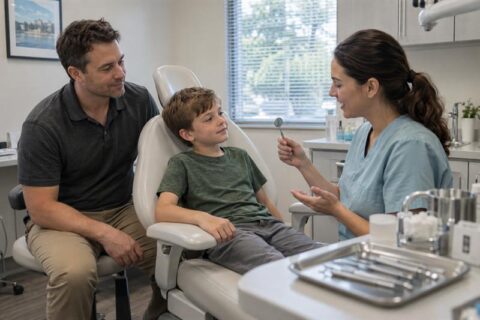
Children notice when they are being included. A dental team that speaks directly to the child can help the child feel seen and less like something is being done around them without their understanding.
This does not mean ignoring the parent. It means the child is part of the conversation in a way that supports cooperation.
Each Step Is Explained Before It Happens
Predictability can lower stress. If the team explains what comes next before changing tools, moving the chair, or starting a cleaning step, the child has more time to process what is happening.
This is one of the clearest differences between an office that sees children and one that is genuinely kid-friendly. Children usually do better when they are not caught off guard.
Parents Are Included Without Adding Pressure
Parent involvement helps when it supports calm, not when it turns into extra pressure. A good balance keeps the parent informed while allowing the child to build comfort with the dental team too.
This usually works best when everyone in the room is sending the same message: the visit is manageable, the steps are clear, and the child does not need to force confidence they do not yet feel.
Family Dentist or Pediatric Dentist: Which Is the Better Fit?
For many families, a general dentist who is comfortable treating children is a practical choice. It allows parents and children to receive routine care in one place, which can make scheduling easier and help create continuity over time.
At the same time, there are situations where pediatric specialty care makes more sense. The decision should be based on the child’s needs, not just on labels.
When a Family Dentist May Be a Good Choice
A family dentist is often a good fit when the child needs routine preventive care and benefits from going to the same office as other family members. Familiarity can help some children settle in faster, especially when dental visits become part of a normal household routine.
If a family is looking at this option, reading about how to choose a dentist in Wilmington before the first appointment can help clarify what to look for in communication, approach, and fit.
When Pediatric Specialty Care May Help
Pediatric specialty care may be more appropriate when a child has significant dental anxiety, developmental needs, or a history that makes routine visits especially difficult. In those cases, the issue is not convenience. The issue is whether the child needs a more specialized environment or treatment approach.
The most practical option is usually the one that gives the child the best chance of receiving consistent care without repeated stressful experiences.
Helping Children Build Positive Dental Habits Over Time
Comfort at the dentist is not separate from oral health. The two are connected. When children feel less stressed about visits, regular care can become easier to maintain, and that can support better long-term habits.
This is why early routine visits matter. A child who becomes familiar with checkups, cleanings, and simple dental conversations may be less likely to treat every appointment like a major event. At home, daily habits still do a lot of the work. These daily cavity-prevention habits for adults and kids are a strong starting point, and so is understanding how sugar affects a child’s oral health.
- Keep dental visits routine instead of treating them like rare events
- Use calm language when talking about oral health
- Support brushing, flossing, and nutrition habits at home
- Build familiarity so the child knows what dental care feels like over time
Key Takeaways for Parents Choosing a Kid-Friendly Dentist in Wilmington
- A kid-friendly dental visit depends more on communication and pacing than on entertainment alone.
- Children usually feel calmer when each step is explained before it happens.
- Preparation at home shapes how the child arrives and responds.
- Warning-based language usually increases stress before the appointment starts.
- A successful visit is not always about finishing every step right away. Sometimes it is about building trust for the next visit.
- The best fit is the office that can provide consistent care in a way the child can handle well over time.
Conclusion
The challenge is not just that some children feel nervous at the dentist. It is that uncertainty, rushed visits, and the wrong preparation can turn normal hesitation into a pattern that gets harder to reverse. Once a child starts expecting every dental appointment to feel stressful, routine care may become more difficult and small issues may be easier to put off.
Facciolo Dentistry helps families move in the opposite direction. A calm, clearly explained visit can give children a better chance to build trust, stay engaged, and return with less resistance next time. If your child is due for a visit and you want an office that understands how comfort, pacing, and communication shape the experience, Facciolo Dentistry is a practical next step.
How Facciolo Dentistry Approaches Kid-Friendly Dental Visits
At Facciolo Dentistry, the goal is not to force a perfect appointment. The goal is to help children feel comfortable enough to keep moving forward with care. That usually starts with clear explanations, a steady pace, and paying attention to how the child is responding instead of treating every child the same way.
This approach matters because the wrong pace can make future visits harder. The right approach can help families build consistency, which supports preventive dental care over time.
FAQ
What makes a dentist kid-friendly?
A kid-friendly dentist helps children feel safe and understood during the visit. The biggest difference is usually not the waiting room. It is how the team communicates, how each step is explained, and whether the child is given time to adjust. A practice can see children without being especially effective at helping them feel calm, which is why parents should pay attention to the care approach, not just the label.
How can parents help a child feel comfortable at the dentist?
Parents usually help most by keeping the visit simple and predictable. Short, calm explanations often work better than long warnings or repeated reassurance. A child who hears that the dentist will look at and clean their teeth often arrives more settled than a child who hears a long speech about not being scared. Rest, timing, and avoiding a rushed arrival also make a real difference.
What happens during a child’s first dental visit?
A first visit usually focuses on helping the child get familiar with the setting while the dental team checks the teeth and mouth. The appointment may include an exam, a cleaning, and X-rays if needed. The important distinction is that the first visit is not just about getting through a checklist. It is also where comfort and trust begin, and that shapes how future visits go.
Is a family dentist a good choice for children?
Yes, a family dentist can be a good choice when the office is comfortable treating children and takes a child-aware approach to communication and pacing. For many households, one office for both adults and children can make routine care easier to keep up with. The deciding factor is not whether the office says it is family-friendly. It is whether the child can receive steady, well-handled care there.
What if a child cries or refuses to cooperate at the dentist?
That usually means the child feels uncertain, overwhelmed, or unprepared for what is happening. It does not automatically mean the child is being difficult. A patient response matters because pressure often escalates the situation, while calm explanation and pacing can help preserve trust. What parents should focus on is not whether there was a perfect visit, but whether the experience made future care feel more manageable or more stressful.
How often should children go to the dentist?
Children are commonly seen on a regular schedule for checkups and preventive care. Beyond monitoring oral health, regular visits can help make the dental office feel more familiar. That familiarity matters because children who know what to expect often handle future appointments with less stress, which can support better long-term consistency.