Dental Implant Care: Daily Habits and Checkups That Support Long-Term Implant Health
At Facciolo Dentistry, a common question after treatment is simple: what helps keep a dental implant healthy over time? The short answer is consistent home care, regular professional monitoring, and paying attention to changes early instead of waiting for a bigger problem.
Many people assume implant care is either exactly like caring for a natural tooth or much simpler because an implant cannot get a cavity. A more useful way to think about it is this: dental implant care is usually straightforward, but it needs to be done with purpose. The goal is not only keeping the visible crown clean. The goal is protecting the tissues and structures that support it.
Why Dental Implant Care Still Matters After Healing
Once the implant has healed and the final restoration is in place, the focus shifts from recovery to maintenance. That does not mean the risk is gone. It means the risk changes.
The implant itself is made from materials that do not get cavities, but the gums and bone around it still respond to plaque, irritation, and pressure. If those areas are not cared for consistently, inflammation can start. That is often associated with soreness, bleeding, and buildup around the gumline, and over time it can create a less stable environment for the implant.
That is why long-term care matters just as much as the placement process. If you want a refresher on the earlier stages, this guide to the dental implants process explains what happens before maintenance becomes the focus.
Implants do not get cavities, but the surrounding tissue still needs care
A common misunderstanding is that implants are maintenance-free because they are not natural teeth. In practice, this is where problems can begin. The tissue around an implant can still become irritated and inflamed, especially when plaque sits near the gumline or in areas that are harder to clean.
It is also possible to have little or no pain and still have early signs of irritation around an implant. The implant may feel solid, but the gums around it can still show changes that need attention. That is why bleeding, tenderness, or recurring irritation around an implant should not be brushed off as minor.
Long-term success depends on home habits and professional monitoring
Implants generally do best when daily habits and regular checkups work together. Home care removes buildup day to day. Professional visits help catch things patients do not always notice, such as changes in bite pressure, early gum inflammation, or spots where the restoration is trapping plaque.
Small issues are usually easier to manage when they are caught early. They often become harder to correct when they are ignored for months.
Daily Habits That Help Keep Dental Implants Healthy
The most practical approach to dental implant maintenance is consistency. Patients do not usually need a complicated routine. They need one that cleans the right areas every day and is realistic enough to keep doing.
- Brush twice a day with a soft-bristled toothbrush.
- Clean carefully along the gumline around the implant crown.
- Clean between teeth and around the restoration every day.
- Use tools that fit the shape of the restoration and the spaces around it.
- Choose effective products that are not overly abrasive.
This usually works best when the routine matches the restoration. A single implant crown does not create the same cleaning challenges as a larger bridge or fixed restoration, so technique matters more than following a generic checklist.
Brushing gently and thoroughly around the implant
Brushing around an implant should be gentle, but it should not be superficial. The goal is to clean the gumline well enough to remove plaque without scrubbing so hard that the tissue gets irritated.
One common problem is brushing the visible crown well but missing the edge where the crown meets the gums. That is often where buildup stays. Over time, that can lead to irritation first, then ongoing inflammation if the routine does not improve.
Flossing and cleaning between teeth and restorations
Cleaning between teeth matters because implant restorations can create spaces where plaque collects differently than it does around a natural tooth. If those areas are skipped, the gums around the implant are often the first place to show it.
This is where one-size-fits-all advice breaks down. A single implant crown may be fairly simple to clean. An implant bridge or a restoration with tighter access points may need a different approach. What matters most is that the routine reaches the areas where buildup tends to collect.
Helpful tools such as interdental brushes or water flossers
Some patients do well with floss alone. Others clean more effectively with interdental brushes or a water flosser. The right tool is usually the one that helps clean thoroughly without making the routine harder to maintain.
Patients are often more successful when their tools fit the restoration and their dexterity. The problem is not usually a lack of effort. It is using a method that does not clean the areas that need the most attention.
Choosing products that are effective without being too abrasive
Soft-bristled toothbrushes and gentle, non-abrasive products are usually the better direction for daily care. Harsh scrubbing or rough products do not create better implant hygiene. They can create more irritation.
The better standard is simple: effective cleaning without unnecessary trauma to the tissue. That keeps the focus on long-term gum health and stable daily maintenance.
Habits That Can Put an Implant at Risk
Most long-term implant problems do not start with one dramatic event. They start with repeated habits that add stress or allow inflammation to build over time.
- Skipping routine cleanings and exams
- Smoking
- Clenching or grinding
- Chewing hard foods or objects like ice and popcorn kernels
- Ignoring mild irritation because the implant still feels stable
These habits often seem harmless in the moment. Their effects can build gradually, and by the time the area feels noticeably different, more attention may be needed.
Skipping routine cleanings
Feeling fine is not the same as being problem-free. This is especially true with implants. A patient may not notice changes in tissue health, bite pressure, or plaque retention until irritation has become more established.
Missed maintenance visits give small issues more time to progress, and small issues around implants are generally easier to manage early than late.
Smoking and healing challenges
Smoking raises concerns because healthy tissue response matters around implants long after the initial healing phase. When tissue health is under strain, plaque control becomes even more important.
The issue is not limited to early healing. Ongoing irritation and inflammation can be harder to settle when tissue health is already compromised.
Clenching, grinding, and excess bite pressure
Excess bite pressure usually shows up as a force problem rather than a hygiene problem. Clenching and grinding can place repeated stress on the implant crown, surrounding components, and the way the bite comes together.
This matters because many patients focus only on brushing and forget that force changes are important too. When bite pressure is off, the restoration can start feeling different even when the area looks clean.
Using teeth to bite hard objects or open packaging
Implant crowns are designed for normal chewing, not to work like tools. Biting hard candy, ice, kernels, or packaging creates unnecessary force in one concentrated area.
That can lead to stress on the restoration or bite changes that were avoidable. Durable is not the same as indestructible.
If your implant area has started to feel different, it is worth having it checked before the problem becomes more involved.
- Bleeding at the gumline around the implant
- Tenderness when brushing or flossing
- A crown that feels slightly off when biting
- Recurring irritation that keeps coming back
When those signs show up, an exam can help determine whether the issue involves inflammation, bite pressure, or the restoration itself.
Why Regular Checkups Are Part of Dental Implant Maintenance
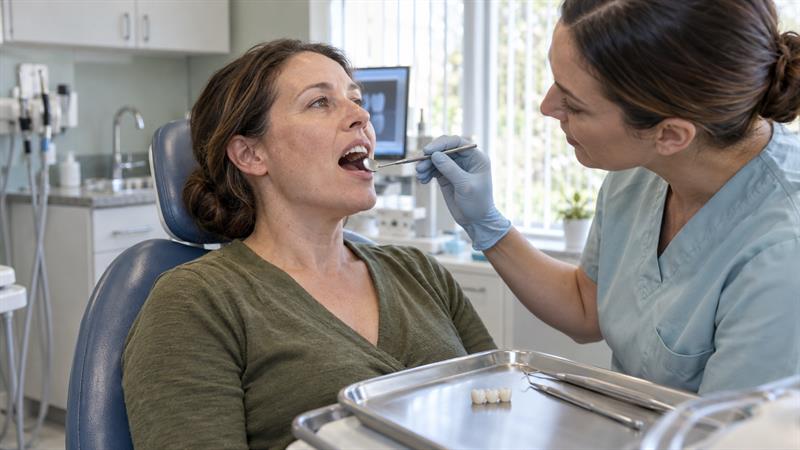
Regular checkups are not just routine boxes to check. They are part of protecting the work that has already been done. Implants still need professional attention because daily home care does not show everything that may be changing.
At Facciolo Dentistry, ongoing maintenance is viewed as part of the full restorative picture. If a patient was a good fit for treatment in the first place, as explained in who is a candidate for dental implants, that still needs to be supported with long-term follow-through.
What the dentist and hygienist may look for
- Plaque buildup around the restoration
- Redness, swelling, tenderness, or bleeding
- Bite pressure and wear patterns
- The condition of the crown or restoration
- Changes in surrounding support when clinically indicated
Many patients do not realize how much can be checked during an implant maintenance visit. The appointment is not only about whether the implant is still in place. It is also about whether the surrounding tissues are healthy and whether the restoration is still functioning the way it should.
Why implant monitoring is different from routine tooth checks alone
Implant monitoring overlaps with a regular dental exam, but it is not identical. The areas around an implant can hold plaque differently, the gum response can look different, and the restoration can create pressure points or cleaning challenges that need closer attention.
This becomes important when everything feels stable but the tissues tell a different story. That is one reason routine monitoring matters even when there is no pain.
When more frequent maintenance may be recommended
Some patients need closer follow-up than others. A history of gum disease, smoking, difficulty cleaning around the restoration, or grinding and clenching habits can change the maintenance picture.
The main takeaway is that implant care is not identical for every patient. What matters most is whether the area is staying clean, comfortable, and stable over time.
Signs an Implant May Need Attention
Implant problems usually show up first as changes, not emergencies. The earlier those changes are recognized, the easier it is to figure out what is actually going on.
- Redness or swelling around the implant
- Tenderness or bleeding near the gumline
- A bad taste or recurring irritation
- A crown that feels loose or different when biting
- Discomfort that does not settle down
If you are noticing one of these patterns, the area usually needs a closer look. The issue may involve inflammation, a bite problem, or something related to the restoration itself, but waiting often makes the next step more involved.
Redness, tenderness, or bleeding near the implant
These are some of the earliest signs that the tissue around the implant is not staying calm and healthy. This is where problems can begin, especially when buildup is sitting near the gumline or a cleaning routine is missing key areas.
If ignored, irritation often becomes more persistent and harder to reverse. Early attention matters because it is generally easier to address tissue changes before they become a larger maintenance problem.
A crown that feels loose or bite changes
A crown that feels slightly mobile, uneven, or different when chewing should not be written off as nothing. That change usually means something in the restoration or bite needs evaluation.
It does not automatically mean the implant has failed. It does mean the area is no longer behaving normally, and that is often the point when a simpler correction may still be possible.
Bad taste, swelling, or discomfort that does not improve
Persistent swelling, a bad taste, or discomfort that keeps returning usually signals that the area is not settling on its own. When symptoms repeat, that pattern matters more than whether they feel severe in the moment.
This is where waiting tends to work against the patient. Ongoing symptoms often mean the problem has moved past simple irritation and needs direct evaluation.
Dental Implant Care Compared With Other Tooth Replacement Options
Implants are fixed in place, but that does not make them maintenance-free. Their care needs are simply different from removable options.
For patients comparing options, dentures vs. dental implants explains the broader differences in function and fit. Once an implant is already in place, the main point is that fixed restorations still need detailed cleaning around the gums and restoration edges.
How implant maintenance differs from denture care
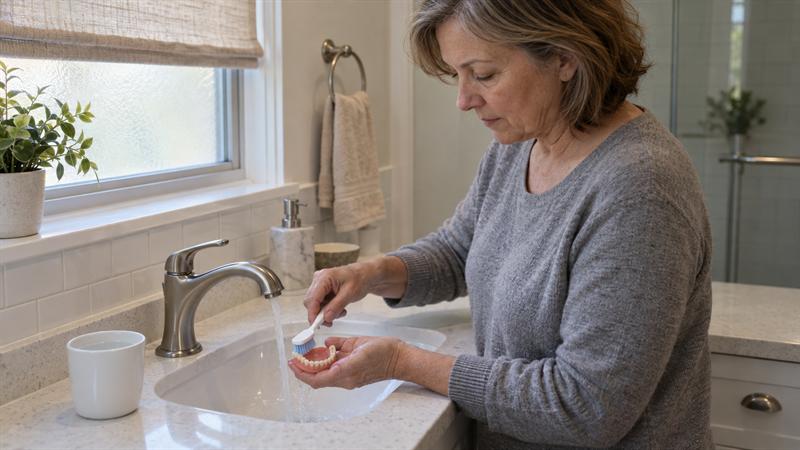
Dentures are removed and cleaned as appliances. Implants stay in place and need cleaning around the tissue and restoration while they are in the mouth. That difference changes the routine completely.
If you wear dentures, this denture care guide covers the day-to-day needs of removable prosthetics. Implant care is less about storage and more about keeping the supporting tissue clean and stable.
Why fixed restorations still need routine hygiene support
Fixed does not mean self-maintaining. This is one of the most common misunderstandings around implants.
Because the restoration stays in place, some areas can be easier to ignore during home care. That can lead to hidden buildup near the gums, which is exactly where implant maintenance needs the most attention.
Key Takeaways
- Dental implant care is about protecting the gums, bone, and restoration around the implant, not just the crown you can see.
- Daily brushing and cleaning between teeth or around the restoration matter more than complicated routines.
- Regular checkups help catch plaque retention, bite changes, and tissue irritation before they become larger problems.
- Bleeding, swelling, tenderness, looseness, or recurring discomfort are signs the implant area needs attention.
Conclusion
Problems around implants are often less about one dramatic failure and more about gradual neglect, missed warning signs, or repeated stress that slowly creates a bigger issue around an otherwise stable restoration. When implant care slips, irritation can build, bite issues can go unchecked, and simple maintenance needs can turn into more involved treatment.
Facciolo Dentistry helps patients protect their restorations by focusing on the patterns that commonly cause trouble: plaque around the gumline, cleaning challenges around the restoration, and force-related wear that patients may not notice on their own. If your implant feels different, your gums are showing signs of irritation, or you are not sure your home routine is cleaning the right areas, the practical next step is to have it evaluated at Facciolo Dentistry before a small issue becomes harder to correct.
How Facciolo Dentistry Approaches Long-Term Implant Maintenance
At Facciolo Dentistry, implant maintenance is not treated like an afterthought once placement is complete. The focus stays on how the restoration is functioning day to day, how the surrounding tissue is responding, and whether the patient can realistically keep the area clean at home.
This matters because what usually goes wrong with implants is not mysterious. It is buildup collecting where patients cannot see well, pressure changing the way the bite comes together, or recurring irritation getting ignored because the implant still feels solid. A practical maintenance approach helps keep those patterns from turning into larger problems.
FAQ
How do you care for dental implants every day?
Daily care usually means brushing twice a day with a soft-bristled toothbrush, cleaning carefully along the gumline, and cleaning between teeth or around the restoration where plaque collects. The part many people miss is that implant care is not only about the visible crown. It is about keeping the tissue around it healthy.
A single implant crown may be easy to clean with a simple routine, while a larger restoration may trap buildup in more difficult areas. That is why a routine that reaches the right spots is more important than using a long list of products.
Do dental implants need special cleaning tools?
Not always. Some patients do well with a toothbrush and standard between-tooth cleaning, while others clean more effectively with interdental brushes or a water flosser.
The real question is not whether a tool is labeled for implants. The question is whether it helps clean the spaces around your specific restoration. The most useful tool is the one that removes buildup consistently without irritating the gums.
What should you avoid with dental implants?
The biggest things to avoid are skipping maintenance visits, smoking, grinding or clenching without addressing the pressure, chewing hard objects like ice or kernels, and using your teeth like tools. These habits usually create either inflammation problems or force problems.
That distinction matters. Poor cleaning and missed visits let tissue irritation build. Hard chewing and grinding place stress on the restoration and bite. Both patterns can put long-term implant health under pressure, but they do it in different ways.
How often should dental implants be checked by a dentist?
Implants should still be checked during routine dental exams and cleanings, and some patients need closer follow-up based on tissue health, restoration design, or bite-related concerns. The purpose of these visits is to monitor more than just whether the implant feels secure.
For example, a patient with a history of gum problems or difficulty cleaning around the restoration may need more attention than someone with easier access and stable tissue response. What matters most is whether the area is staying clean, comfortable, and stable over time.
What are early signs of a dental implant problem?
Early signs usually include bleeding, redness, swelling, tenderness near the implant, a bad taste, recurring irritation, or a crown that feels different when biting. These changes do not automatically mean the implant has failed, but they do mean something is no longer behaving normally.
A common misunderstanding is waiting for severe pain before taking a symptom seriously. With implants, small repeated changes are often the more useful warning sign. That is how tissue inflammation and bite problems tend to show up first.
Is dental implant care different from denture care?
Yes. Dentures are removable and cleaned like appliances. Implants are fixed in place and need cleaning around the gumline and restoration while they stay in the mouth.
What people commonly misunderstand is assuming fixed means lower maintenance. In practice, fixed restorations still need careful hygiene support because buildup tends to collect at the edges and beneath areas patients may not be cleaning thoroughly enough.