Sleep Apnea and Your General Dentist: The Link
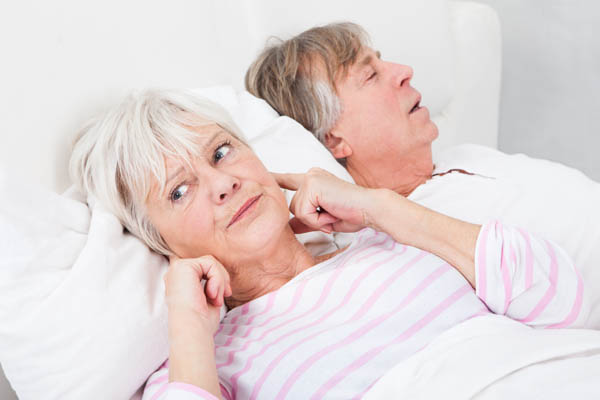
Millions of people all over the world live with
sleep apnea, however, a good number of those are yet undiagnosed. Most people would probably think of a sleep clinic first for diagnosis and treatment, but the general dentist is sometimes the first professional to discover signs of the condition. They also provide options to ease the condition. Continue reading to discover the link between
sleep apnea and your general dentist.
An overview of sleep apnea
Sleep apnea is a chronic sleep condition that causes breathing to cease at different points throughout a sleep cycle. The condition can be obstructive sleep apnea or central sleep apnea. Obstructive sleep apnea is the most prevalent type, in which the soft tissues in the airways collapse during sleep, causing breathing interruptions. The collapse stops oxygen from going through the air passages into the lungs.
With central sleep apnea, the brain stops sending signals required to maintain breathing during sleep. There is no physical disturbance in the airways, although the body will react like there was an interruption.
Both forms of sleep apnea disrupt sleep patterns. Patients living with untreated or undiagnosed sleep apnea will usually wake up feeling tired and exhausted. Without treatment, sleep apnea has short and long term consequences on physical and mental health.
The role of general dentists in sleep apnea treatment
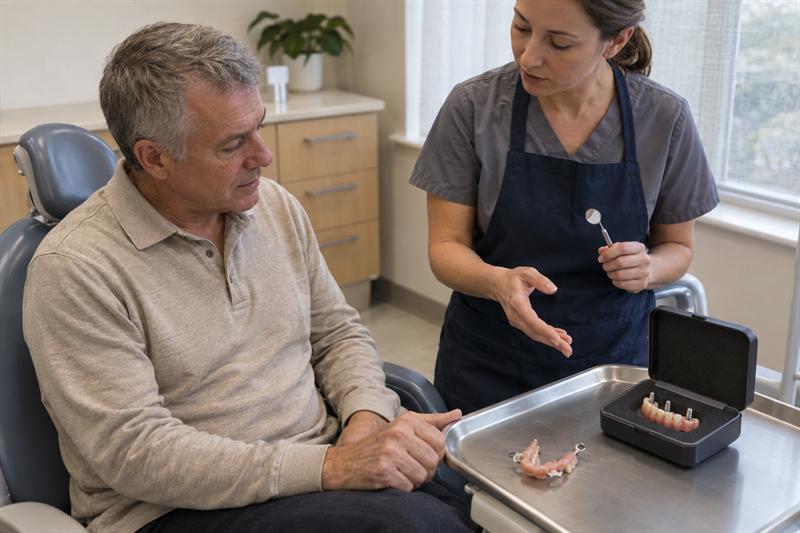
The general dentist can be an excellent partner in the treatment of sleep apnea. After a diagnosis, a dental appointment can help patients discover treatment options for the condition. The dental professional will usually recommend the use of oral appliances. The devices ease symptoms with patients who have mild to moderate cases of sleep apnea.
Mandibular advancement devices (MAD) are the most common oral appliances. The devices look similar to mouthguards and shift the lower jaw forward. At this position, the muscles that collapse during sleep tighten and do not fall, so the airways stay open. Gradually, the device can strengthen the airway to reduce or even stop sleep apnea completely. The devices are sometimes adjustable so that the patient can adjust the position of the jaw.
The dentist will assess the patient’s oral cavity to know if they are eligible for the device. If so, they will create models or impressions of the teeth so that a fitting oral device can be created. A precise fit is crucial since a wrong-fitting device can contribute to jaw damage. Patients will wear the device during the night to relieve sleep apnea symptoms.
Tongue-retaining devices are another option, though less common. They hold the person’s tongue in a forward position to ensure the airway stays open during sleep. They can be used for those who cannot get the MAD.
In conclusion
The dentist will work closely with the patient to ensure the oral device is effective and improving the symptoms. Initially, the device may be uncomfortable, but adjustment occurs within a few days. With consistency and regular monitoring, patients with sleep apnea can get the best results and sleep better at night. If you have received a diagnosis and want to learn more about your treatment options, book an appointment with the general dentist for a consultation.
Request an appointment here: https://dentalhealthde.com or call John M. Facciolo D.M.D., P.A. at (302) 652-2451 for an appointment in our Wilmington office.